
Pine Grosbeak


Pine Grosbeak (Pinicola enucleator): Complete Identification, Irruption Guide & Feeder Library
Quick Answer: How to Attract & Identify Pine Grosbeaks
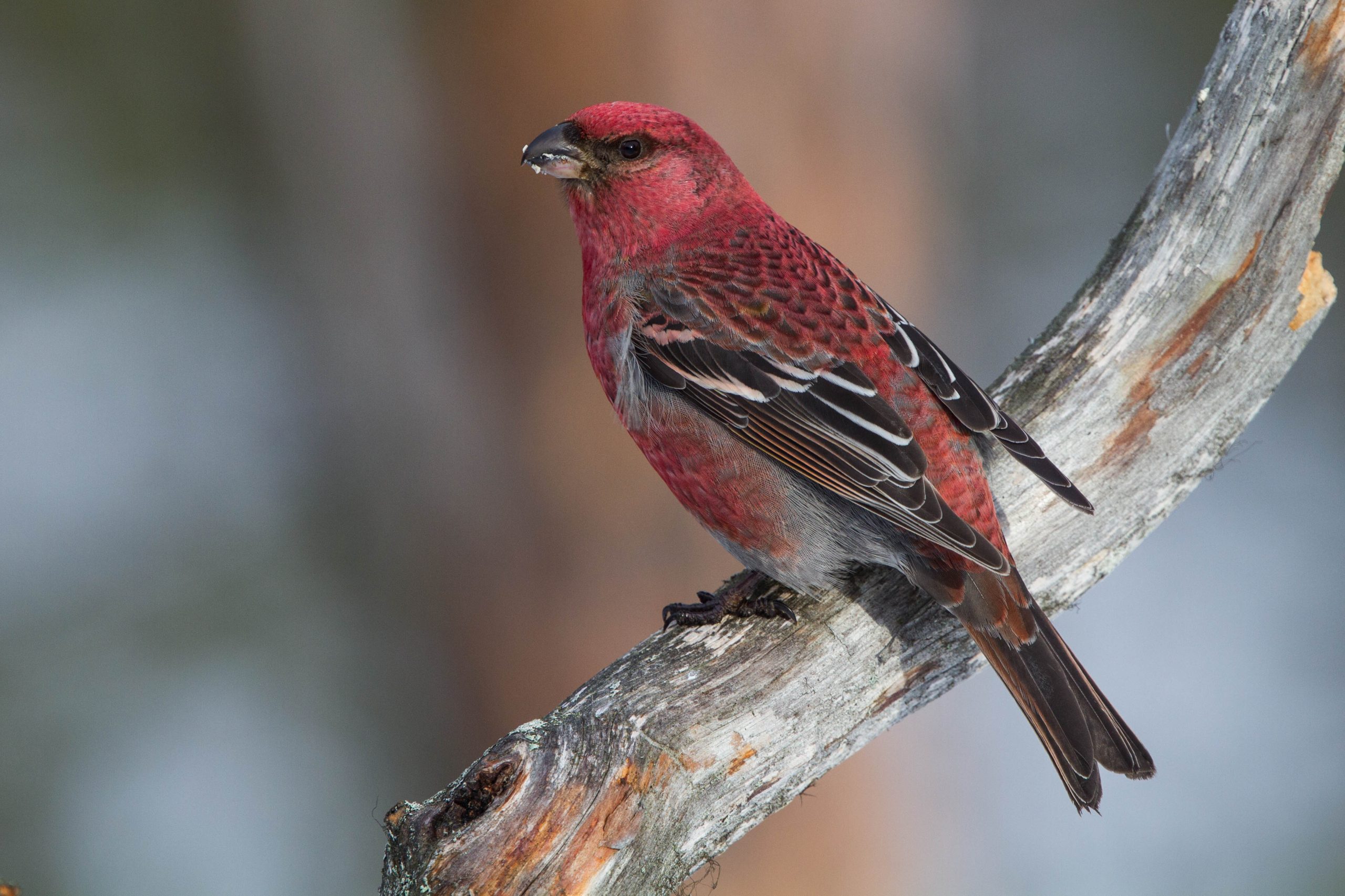
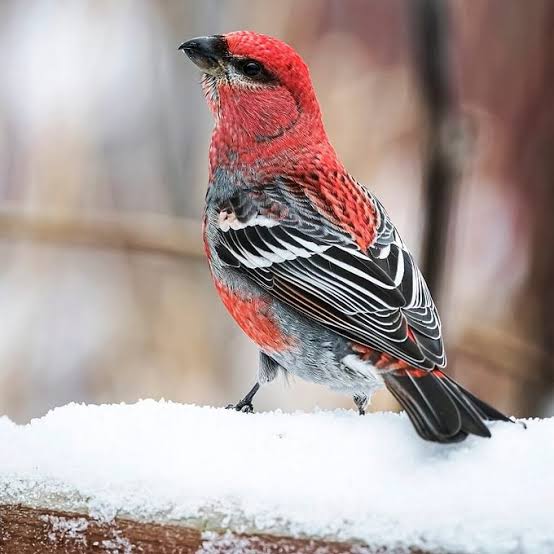
The Pine Grosbeak (Pinicola enucleator) is the largest of the northern finches — a plump, robin-sized bird with a stubby dark bill and two crisp white wing bars. Adult males glow rose-red over the head, breast, and rump; females and young birds are soft gray with a mustard-yellow or russet-orange crown. This is an irruptive winter finch: it breeds in boreal and montane conifer forests across Canada, Alaska, and the western mountains, then wanders south into northern US backyards mainly in years when mountain ash berries and conifer seeds run short. When a flight year reaches your region, attract flocks with black oil sunflower seeds on a large, steady platform feeder near conifers or fruiting trees, plus a heated bird bath — and expect unhurried, remarkably tame visitors that linger for weeks.
Species Physical Profile & Morphometrics
The Pine Grosbeak has a full-chested, big-headed silhouette with a long tail, moving through branches with slow, deliberate hops that set it apart from nervous, fluttery finches. Despite the name it is a true finch (Fringillidae), and it is circumboreal — the very same species breeds from Scandinavia across Siberia as well as throughout northern North America.
When confirming an identification, rule out the Evening Grosbeak (yellow-and-brown, with a massive pale ivory bill twice the bulk of the Pine’s small dark one) and the Purple Finch (much smaller, raspberry-red rather than rose-red, with a short notched tail and no bold white wing bars).
Essential Morphometric Field Marks:
- Body Length & Mass: Averages 7.9 to 9.8 inches (20–25 cm) with an adult mass of 1.8 to 2.8 ounces (52–78 grams) — roughly American Robin bulk and the heavyweight of the northern finch flock.
- Wingspan: Measures about 13 inches (33 cm), with broad black wings marked by two sharp white wing bars visible at rest and in flight.
- Bill Structure & Color: A short, stubby, dark conical bill with a slightly curved culmen — small for a “grosbeak,” but surgically precise at extracting kernels from fruit and seeds (the trait behind the name enucleator, “one who removes the kernel”).
- Color Phases: Plumage color signals sex and age: adult males rose-red; females mustard-yellow or russet-orange on crown and rump; young males wear female-like plumage and do not turn red until their second year.
Rich rose-red washes the head, back, breast, and rump, fading to soft gray on the belly and flanks. Wings and tail are blackish with two clean white wing bars, and the red deepens to its richest carmine in worn spring plumage.
Elegant medium-gray overall set off by a mustard-yellow to russet-orange crown and rump (some individuals are distinctly orange rather than yellow). The same black wings with double white bars and stubby dark bill confirm the species.
Pine Grosbeak Vocalization Guide (2 Simulated Mnemonics)
Pine Grosbeaks have soft, musical voices: a clear fluty call traded constantly within flocks, and a gentle warbled song delivered mostly by males on the breeding grounds. Editorial note: Wikimedia Commons currently hosts no freely licensed recordings of this species, so instead of embedded field audio we provide faithful synthesized simulations of the two core sounds below. To hear wild field recordings, browse the species library at xeno-canto: Pine Grosbeak.
1. Whistled “Tee-Tee-Tew” Call
2. Flute-Like Warbled Song
Habitat Range & Irruptive Winter Biology
Pine Grosbeaks breed in open coniferous and mixed boreal forest — spruce, fir, pine, and larch — across Alaska and Canada, dipping into the northern US and running south along the western mountains through the Cascades, Sierra Nevada, and Rockies to New Mexico (the montana subspecies photographed at Moraine Lake in our gallery).

Berry-Driven Wanderers of the Northern Forest
Pine Grosbeak winters are ruled by fruit, not calendars. When mountain ash (rowan), crabapple, and conifer seed crops are plentiful in the north, the birds stay home; when those crops fail, flocks irrupt south into the northern states — New England including Maine, the Great Lakes region, and down the mountain chains. Historical records show the species has been a famously irregular winter visitor for well over a century.
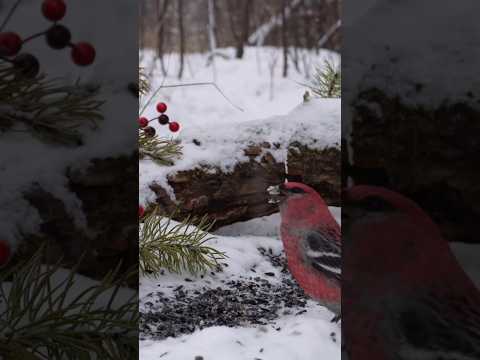
In irruption winters, watch mountain ash trees heavy with orange berries, ornamental crabapples, and platform feeders. Flocks methodically strip a tree over days, crushing each berry and discarding the pulp after extracting the kernel — then move as a group to the next food source.
Backyard Behavioral Patterns & Social Dynamics
Pine Grosbeaks bring the unhurried rhythm of the boreal forest straight to your yard. Four signature behaviors explain most of what you will observe:
🐌 The Trusting “Mope”
Having evolved in remote northern forests with little human contact, Pine Grosbeaks are famously tame and slow-moving, often allowing approach within a few feet. Newfoundlanders nicknamed the bird the “mope” for its sluggish, unbothered manner — at feeders, expect calm, deliberate diners rather than nervous grab-and-go visitors.
🎒 A Built-In Lunchbox (Gular Pouch)
During the breeding season, both parents develop a distensible throat (gular) pouch — a specialized food-storage sac in the floor of the mouth — which they stuff with seeds and fruit pulp to carry back to the nestlings. It is one of the most unusual provisioning adaptations among North American songbirds.
🍒 Mountain Ash Berry Specialist
Winter flocks track mountain ash (rowan) and crabapple crops, clambering methodically through fruit clusters. Watch closely and you will see the enucleator technique: each berry is crushed, the kernel extracted and swallowed, and the pulp and skin discarded — a cleanup crew that leaves a carpet of pulp beneath the tree.
❄️ Settle-In Irruption Flocks
Unlike restless siskins that bounce between yards, an irrupting Pine Grosbeak flock that finds reliable sunflower platforms and open water tends to settle into a neighborhood routine for weeks at a time — visiting at predictable hours and roosting nearby in dense conifers.
Problem: Why Pine Grosbeaks Pass Your Feeders By
Even in irruption winters, plenty of northern homeowners see flocks in a neighbor’s mountain ash yet never host one themselves. The usual reasons:
First, this is a large, deliberate bird — a 60-gram grosbeak will not wrestle with swinging tube feeders or tiny perches, and its slow feeding style loses every race against frenetic Pine Siskins and goldfinches at crowded small feeders. Second, yards without fruiting trees or coniferous cover simply do not register as habitat to a bird wired for berry-laden mountain ash and spruce tops. Third, seed blends padded with milo and wheat filler get ignored outright. Address all three and an irruption flock can become a season-long resident.
Method 1: Build Calm, Unhurried Feeding Stations
Design for a big, slow, trusting bird — not for the finch rat-race:
-
Install a Large Platform or Roomy Hopper Feeder
Choose a feeder with wide, flat landing space at least 3 inches deep where a heavy grosbeak can settle in and feed methodically. Our lab-tested roundup of the Best Platform Feeders for Large Flocks compares proven models.
-
Pole-Mount Rock-Steady at 5 Feet
Anchor on a rigid 1-inch steel pole with a ground auger. Pine Grosbeaks dislike motion underfoot; a feeder that stays dead-still when a 60-gram bird lands earns longer, repeat visits.
-
Site It Beside Conifers or Fruiting Trees
Place the station within 10–15 feet of spruce, fir, mountain ash, or crabapple. Flocks stage in these trees between feeding bouts, and a feeder under their natural staging tree gets discovered first and used most.
-
Give Them Elbow Room from Finch Mobs
If siskins and goldfinches monopolize your main station, hang a second platform a short distance away. The grosbeaks’ unhurried style means they feed best where smaller finches are not constantly flushing around them.
Method 2: Stock Seeds, Grow Winter Fruit, Keep Water Open
Match the menu to a berry-and-kernel specialist:
-
Lead with Black Oil Sunflower on Open Platforms
Thin-hulled black oil sunflower is the top feeder seed for Pine Grosbeaks — easy kernels, high fat, zero filler. Skip grocery blends with milo and wheat, which grosbeaks sweep aside untouched.
-
Plant Mountain Ash and Crabapple — Living Feeders
A single mountain ash (rowan) or persistent-fruit crabapple is the most powerful Pine Grosbeak magnet a northern yard can grow. Choose varieties whose fruit hangs into late winter, and an irruption flock will find it on its own.
-
Keep a Heated Bird Bath Running
After dry seed and fruit meals, flocks drop in to drink together. A thermostatically controlled heated bath can draw grosbeaks into yards that have no fruiting trees at all. See the Best Heated Bird Baths.
-
Stay Stocked Through March in Flight Years
Irruption flocks reward consistency: keep platforms full from first arrival through early spring. Flocks often linger until northern berry shrubs leaf out again, giving you weeks of close, calm observation.
Tool Solution: Recommended Hardware for Pine Grosbeaks
Equipment sized for the heavyweight of the winter finch flock:
Oversized Cedar Platform Feeder
Wide, flat landing deck that lets heavy, deliberate grosbeaks settle in and feed calmly without jostling or sway.
- • Capacity: 8 lbs Black Oil Sunflower
- • Deck Depth: 3.5 inches flat
- • Mount: 1-inch Pole Mount Ready
Pure Black Oil Sunflower Seed
Thin-hulled, high-fat kernels that match the grosbeak’s kernel-extracting bill — no filler grains, no waste.
- • Purity: 100% Black Oil (No Milo)
- • Kernel Ease: Thin shells, fast access
- • Fat Content: High-lipid winter fuel
All-Season Heated Bird Bath (75W)
Thermostatically controlled basin that keeps drinking water open through northern freezes — a proven flock-level magnet.
- • Thermostat: Activates at 35°F auto
- • Depth: 2 in (Safe for large finches)
- • Rim: Wide grip perch ring
Frequently Asked Questions
- Species Profile: The Pine Grosbeak (Pinicola enucleator) is the largest northern finch at 8–10 inches, with a stubby dark bill and two white wing bars; males rose-red, females gray with mustard or russet-orange accents.
- Irruptive Winter Finch: It moves south only when mountain ash berry and conifer seed crops fail — feeder appearances are boom-and-bust between winters.
- Feeder Formula: Large, steady platform feeders with pure black oil sunflower, sited beside conifers or fruiting trees, stocked through March in flight years.
- Kernel Specialist: The name enucleator (“one who removes the kernel”) describes its habit of extracting seeds from berries and discarding the pulp.
- Famous Tameness: Boreal isolation made it remarkably unwary — the Newfoundland “mope” often allows approach within a few feet.
- Unique Adaptation: Breeding parents grow a throat (gular) pouch to carry seed and fruit pulp back to their nestlings.
Bird Watching Log
Species: Pine Grosbeak (Pinicola enucleator)
| Pine Grosbeak (Subspecies / Notes: ____________________________) | |