
Sunflower Seeds for Birds: Black Oil vs Striped



Black Oil vs Striped Sunflower Seeds for Birds: Complete Guide
Which sunflower seed should I buy for birds?
Buy black oil sunflower. Its shell is thin enough for a chickadee’s bill, its kernel runs about 40% fat, and more species accept it than any other seed sold. Use striped sunflower only as a deliberate brake for big birds (cardinals, jays, grosbeaks crack it easily), and hulled chips where mess matters — but serve chips sparingly because they spoil fast. If you stock one seed, it is black oil sunflower, full stop.
The 3 Sunflower Forms, Explained by a Guy Who’s Bought a Ton of Each
Black Oil Sunflower — The Champion
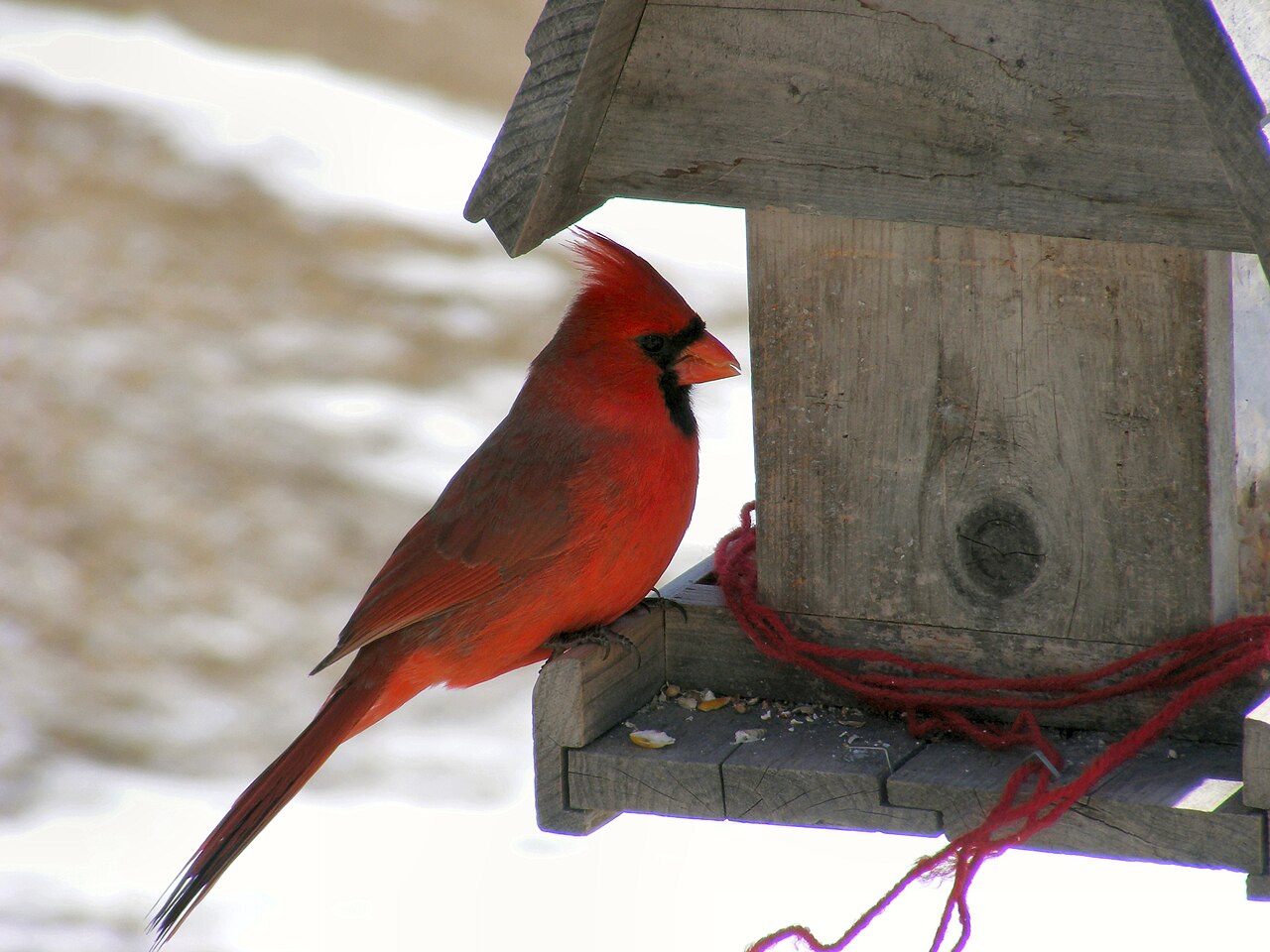
Small, black, thin-shelled and oil-rich. Every seed-eating songbird in North America can open it — chickadees hammer it against a branch, finches crush it with a bill twist, cardinals crack it like a grape. This is the seed that built the bird-feeding hobby, and in thirty years I have never found a yard where it failed. If your feeders are quiet, the fix is usually a bag of fresh black oil, not a new feeder.
Striped Sunflower — The Heavyweight
Bigger, gray-striped, with a shell roughly twice as thick. Cardinals, jays, grosbeaks and doves handle it without effort; goldfinches and small finches mostly can’t. That sounds like a flaw — I use it as a feature. A hopper of striped sunflower slows the big-bird crowd down and protects the black oil tube for the small birds. Two seed types, two feeders, less squabbling.
Sunflower Chips & Hearts — The Zero-Mess Option
Hulled kernels, broken or whole. Every bird takes them, nothing is wasted, and no shell litter accumulates below — the only choice for decks, patios and balconies. The trade-offs: chips cost roughly twice as much per pound of actual food, they mold within a day or two of getting wet, and because there is no shell to slow anyone down, a mob can empty a feeder by lunch. Serve chips in sheltered feeders and modest daily portions.
The Shell & Fat Math Nobody Shows You
Price per bag is the wrong number. Price per pound of food a bird can use is the right one:
| Form | Edible Share | Relative Cost per Pound of Food | Mess | Spoilage Risk |
|---|---|---|---|---|
| Black oil | ~70% (thin shell) | Lowest | Shell litter below | Low (dry shell protects) |
| Striped | ~55% (thick shell) | Low | More litter | Low |
| Chips / hearts | 100% | About 2× black oil | None | High when wet |
Black oil wins the math in almost every yard: more edible food per pound, protected by its shell, at the lowest price. Chips earn their premium only where litter or allergen concerns rule — and only in weather-sheltered feeders.
Who Eats Which: The Sunflower Preference Table
| Bird | Black Oil | Striped | Chips |
|---|---|---|---|
| Northern Cardinal | Loves | Loves | Loves |
| Chickadees | Loves | Struggles | Loves |
| Goldfinches | Takes | Can’t crack | Loves |
| House & Purple Finches | Loves | Rarely | Loves |
| Blue Jays | Loves | Loves | Loves |
| Grosbeaks | Loves | Loves | Loves |
| Titmice & Nuthatches | Loves | Struggles | Loves |
| Doves | Takes | Takes | Loves |
Growing Your Own: The Free Seed Patch
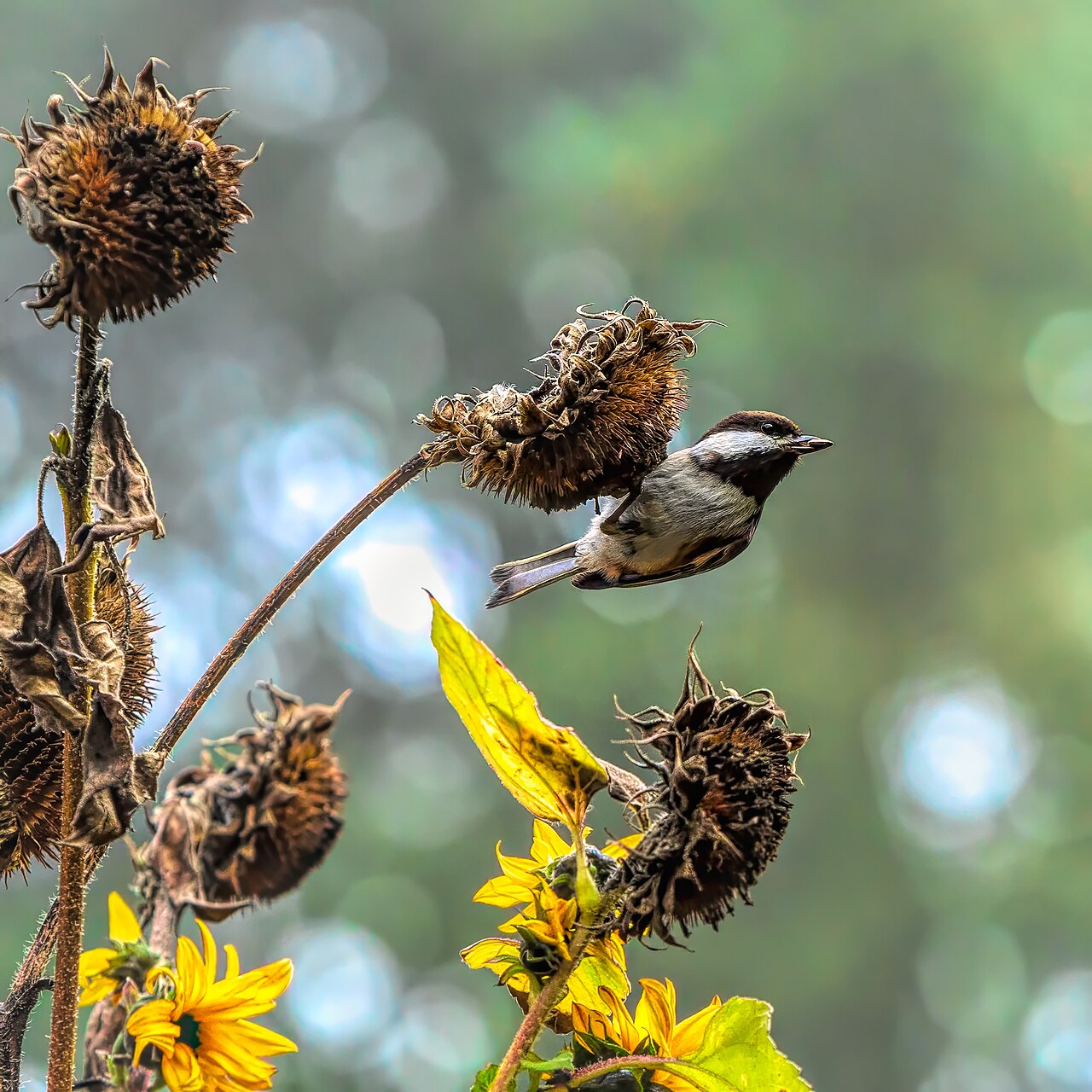
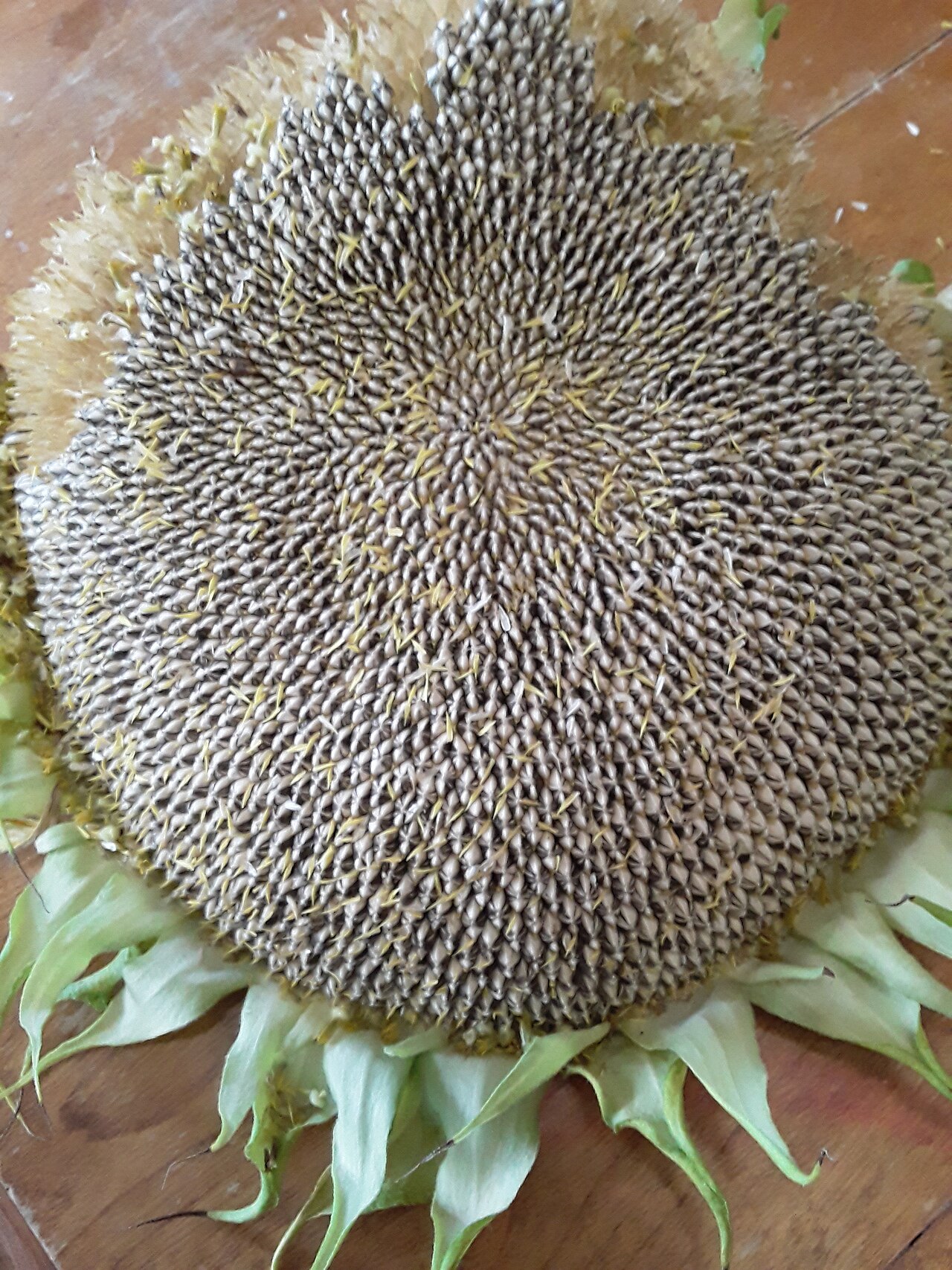
A ten-foot row of sunflowers along a fence is the cheapest feeder program in existence. Plant after the last frost, let the heads ripen and droop, then either cut and dry them to strip seed for winter, or — my preference — leave the heads standing and let the birds harvest directly. Goldfinches, Lesser Goldfinches, chickadees and finches work a standing head for weeks, and watching a goldfinch ride a nodding sunflower in September is better than any feeder ever sold.
Storage & Freshness
Sunflower seed is food; store it like food. Metal cans with tight lids, in a dry garage or shed — never in the paper bag it came in, never on a damp floor, and never in plastic bins a squirrel can chew (they can, and will). Most bags arrive with grain-moth or weevil eggs aboard; a week in the freezer kills every one, and I freeze every new bag as routine. Buy from a store with fast turnover — dusty bags with webbing inside the seams are old stock, and birds can tell before you can.
The Hull Problem (and the Allelopathy Surprise)
Sunflower hulls accumulate. Worse, they contain natural compounds that suppress plant germination — the bare, dead ring under an old feeder is chemistry, not just traffic. Three management options: rake the hull zone monthly and compost it hot (heat breaks the compounds down); move the station yearly; or switch the busiest feeder to chips. What never works is ignoring it — a three-year hull mat grows mold where the ground guild feeds.
7 Sunflower Seed Mistakes I’ve Made So You Don’t Have To
- Buying by bag price instead of edible pounds. Bargain mix is filler; black oil is food. Do the math once and never look back.
- Serving chips in an open tray before rain. Wet chips mold overnight. Weather forecast first, chips second.
- Storing seed in the paper bag. Moths, weevils, mice and moisture all read paper as a suggestion. Metal cans.
- Skipping the freezer step. One unhatched weevil egg becomes a pantry of moths by spring.
- Feeding only striped to “save money.” Small birds can’t crack it; you end up feeding jays exclusively.
- Letting hulls pile up for years. The dead zone under an unmoved feeder is mold chemistry, not aesthetics.
- Buying dusty old stock. Stale sunflower gets boycotted — check for webbing, dust and smell before you haul the bag.
Frequently Asked Questions
- Black oil sunflower is the one seed — thin shell, ~40% fat, every species can open it.
- Striped is a tool, not a staple — it slows big birds; small birds can’t crack it.
- Chips are the mess-free option — twice the price, zero hulls, mold fast when wet.
- Price per edible pound beats bag price — bargain mix is mostly filler birds reject.
- Metal cans + a freezer week — that’s the whole storage program.
- Rake the hull ring monthly — hulls suppress plants and grow mold.
- Grow a sunflower row — the only feeder that refills itself.