
Feeding Mealworms to Birds


How to Feed Mealworms to Birds
How do I feed mealworms to backyard birds?
Offer them in a smooth-sided dish — glass, ceramic or plastic with sides at least an inch high — set on a platform feeder or mounted tray where you can watch. Live mealworms are the irresistible option that trains bluebirds fastest; dried mealworms are cheaper, shelf-stable, and accepted once birds learn them (soak them in warm water first to speed that up). Start with 50–100 worms in the morning at a consistent spot, keep the supply reliable through nesting season, and ration — mealworms are a supplement, not a staple. That’s the whole protocol.
Live vs. Dried: The Honest Comparison
| Live Mealworms | Dried Mealworms | |
|---|---|---|
| Bird response | Instant — movement triggers the hunt reflex | Slow at first; learned over days to weeks |
| Nutrition | Full moisture and fat; ideal for nestlings | Concentrated protein, no moisture — soak to improve |
| Cost | Higher, plus fridge storage | Much lower per bird fed; shelf-stable for months |
| Handling | Refrigerate, feed occasionally, they keep weeks | Zip bag in the pantry |
| Best role | Training new birds, nesting season, bluebird boxes | Everyday supplement once the birds are trained |
The strategy that works in real yards: train with live, maintain with dried. Movement is the billboard — a wriggling dish pulls a passing Eastern Bluebird down the day you set it out, while motionless dried worms may sit ignored for a week. Once the birds know the dish means food, mix dried into live, then taper to mostly dried with live worms as treats and during nesting. My own bluebirds took four days to accept dried-only service after two weeks of live training; a Carolina Wren figured it out in an afternoon, because wrens figure everything out in an afternoon.
Soaking tip: dried mealworms soaked ten minutes in warm water plump up, move slightly when jostled, and go down easier for nestlings — during nesting season I always soak. Think of it as rehydrating them back toward the real thing.
Dishes and Feeders: Escape-Proof Service
Mealworms crawl, and a dish they crawl out of feeds the ants and wastes your money. Requirements:
- Smooth, vertical sides at least 1–2 inches high. Glass, glazed ceramic, or slick plastic; textured surfaces become ladders. Purpose-built bluebird feeder dishes and hanging dome feeders with smooth trays are designed around exactly this.
- Drainage if it’s outdoors uncovered. A dish of rain-drowned worms is a mold farm; either use a drained dish, a roofed feeder, or bring it in when storms threaten.
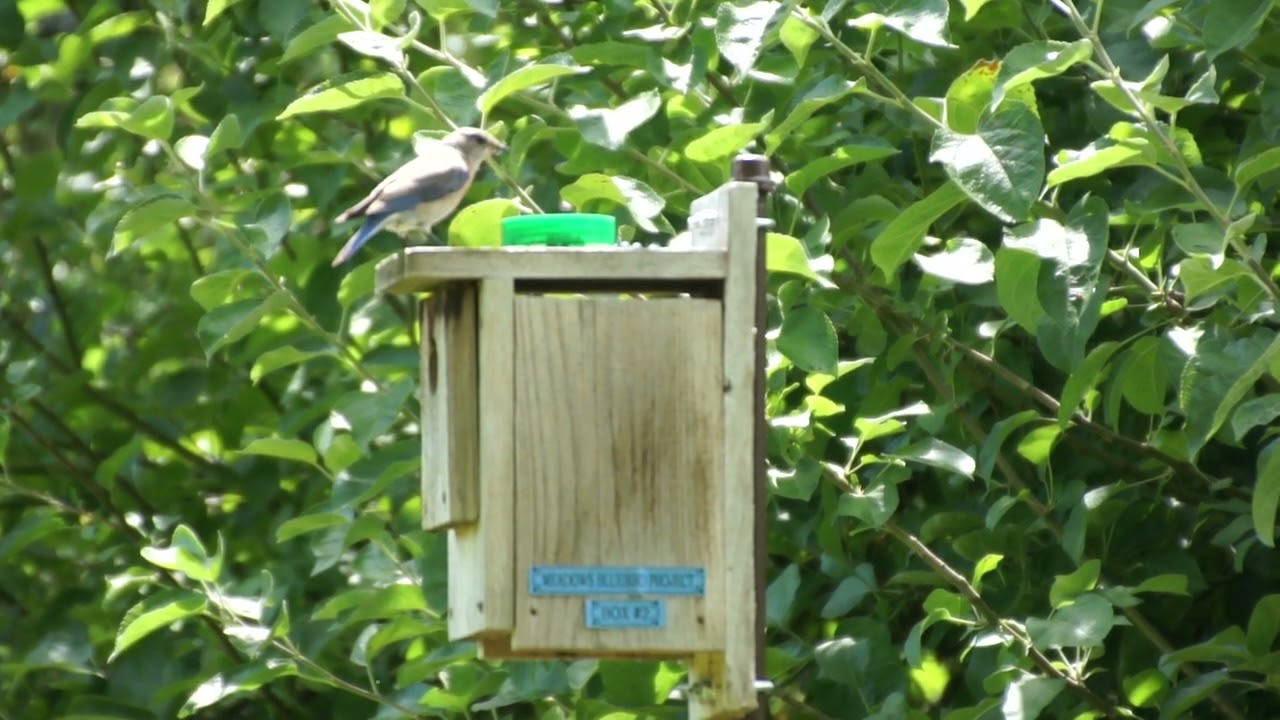
- Visibility. The dish should sit where birds scan for food — on a platform feeder, a deck rail mount, or a post near the nest box, not hidden under shrubbery. Bluebirds hunt by sight from perches.
- Consistency of location. Same dish, same spot, same hours. Mealworm feeding is a training exercise as much as a feeding one.
Squirrel note: most squirrels ignore dried mealworms entirely and show modest interest in live ones — a rare feeder category where the gray menace mostly minds its own business. Starlings, however, will strip a dish in minutes if they find it; a covered bluebird feeder with entry holes, or feeding under a cage guard, keeps the dish for its intended guests.
The Bluebird Protocol: Training Your Pair
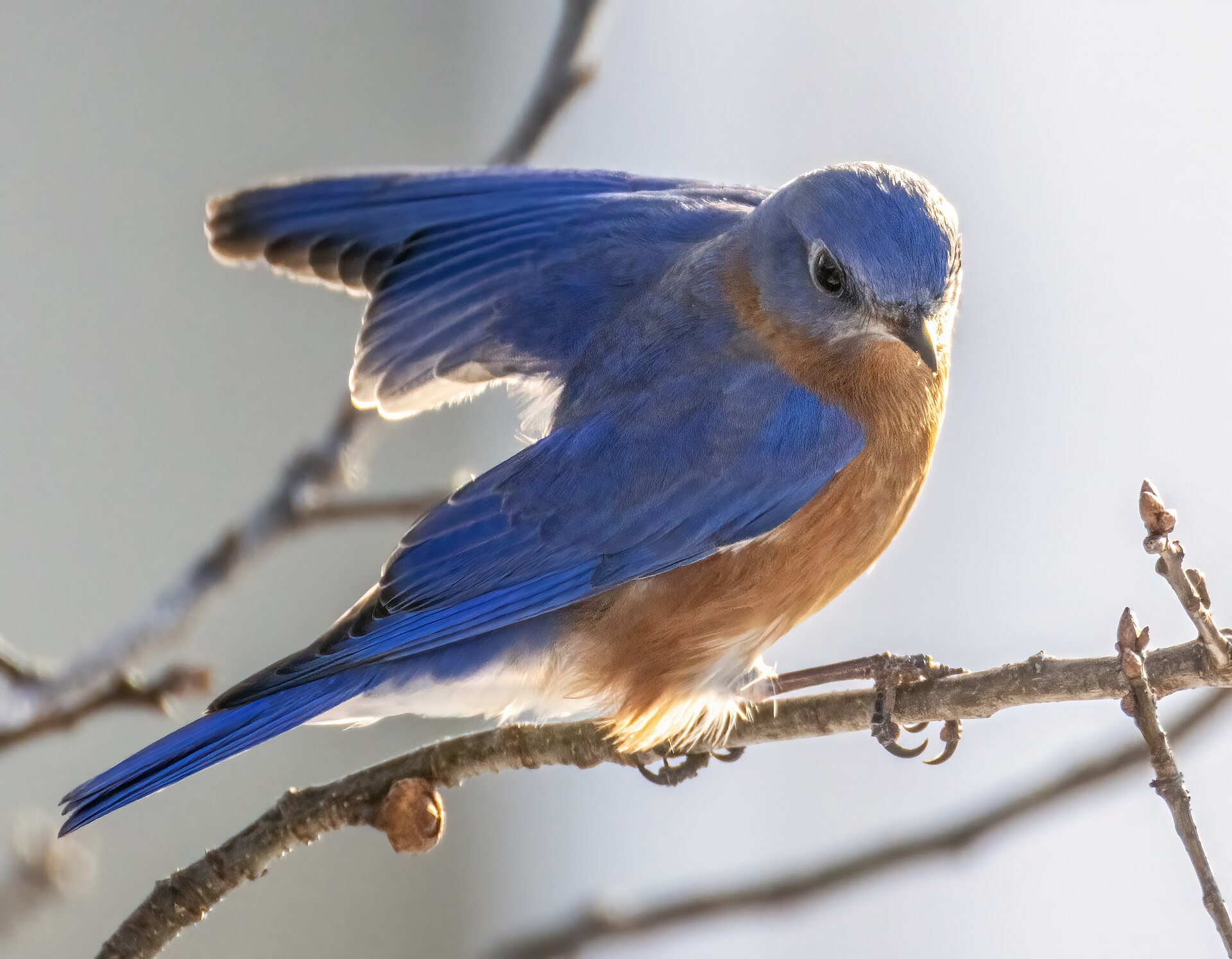
Bluebirds are the reason most people start with mealworms, and there’s a right sequence. This is the exact protocol I’ve used across three states:
- Timing: start when a pair claims your box or winters in your yard. A bonded pair with a territory learns fastest; random migrants are harder to hold.
- Placement: 5–15 feet from the nest box or their favorite perch, in the open where their hunting scan covers it.
- Schedule: same time every morning. Bluebirds are clock-watchers; within a week the pair will be waiting on the perch when you step out. Whistle or tap the dish as you serve — they’ll learn the cue and come to it. This is not folklore; I’ve called in bluebirds with a whistle for years.
- Ration: 50–100 live worms per pair per day, served in two sessions if traffic is heavy. More isn’t kinder — see the quantities section for why.
- Nesting season: keep it reliable. Once eggs hatch, the parents work the dish like a supply line. An empty dish during a cold, wet week forces them to range farther; a stocked one measurably helps the brood.
- Fledging: watch for the parade. The day the parents bring the fledglings to the dish is the day the whole project pays off. Keep the camera by the window from day 10 after hatching.
How Much Is Too Much
Mealworms are protein and fat without the calcium balance of a natural insect diet — the right role is supplement, and the failure mode is a well-meaning host serving unlimited worms until bluebirds stop hunting. Guidelines from long practice:
- Per pair, per day: 50–100 worms during nesting, 25–50 in the off-season. Enough to matter, not enough to replace hunting.
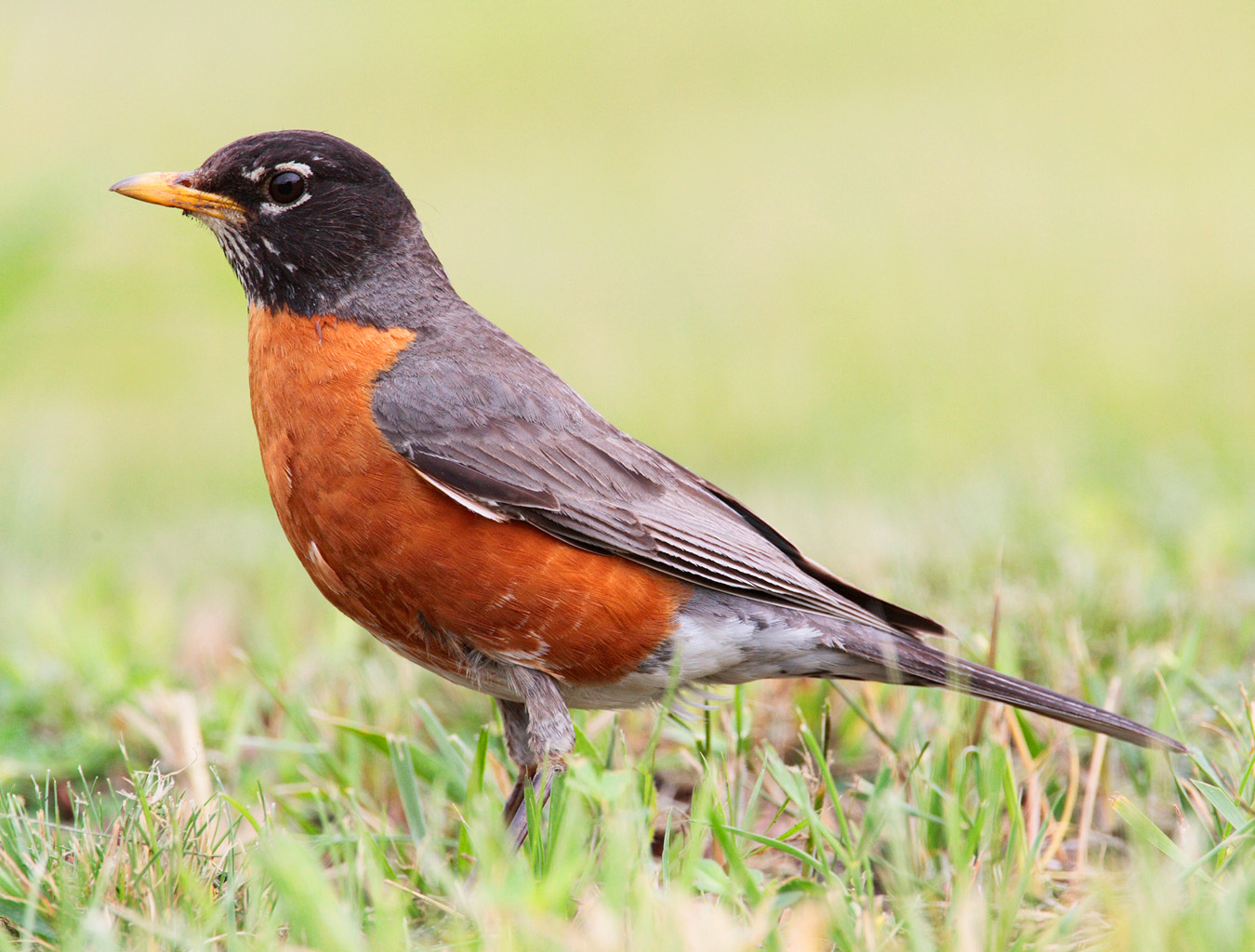
- Other species: a handful. Robins, wrens, chickadees and titmice treat mealworms as bonbons; a few dozen scattered for the yard crowd is plenty.
- Never the only food. Mealworm-only diets cause calcium problems in growing birds; the dish supplements natural foraging, it doesn’t replace it. If you dust worms for nestlings, a pinch of calcium carbonate powder is the pro move.
- Bad-weather generosity is the exception. Cold snaps and wet stretches during nesting are when you loosen the ration — that’s when your dish genuinely changes outcomes.
Raising Your Own (Easier Than You Think)
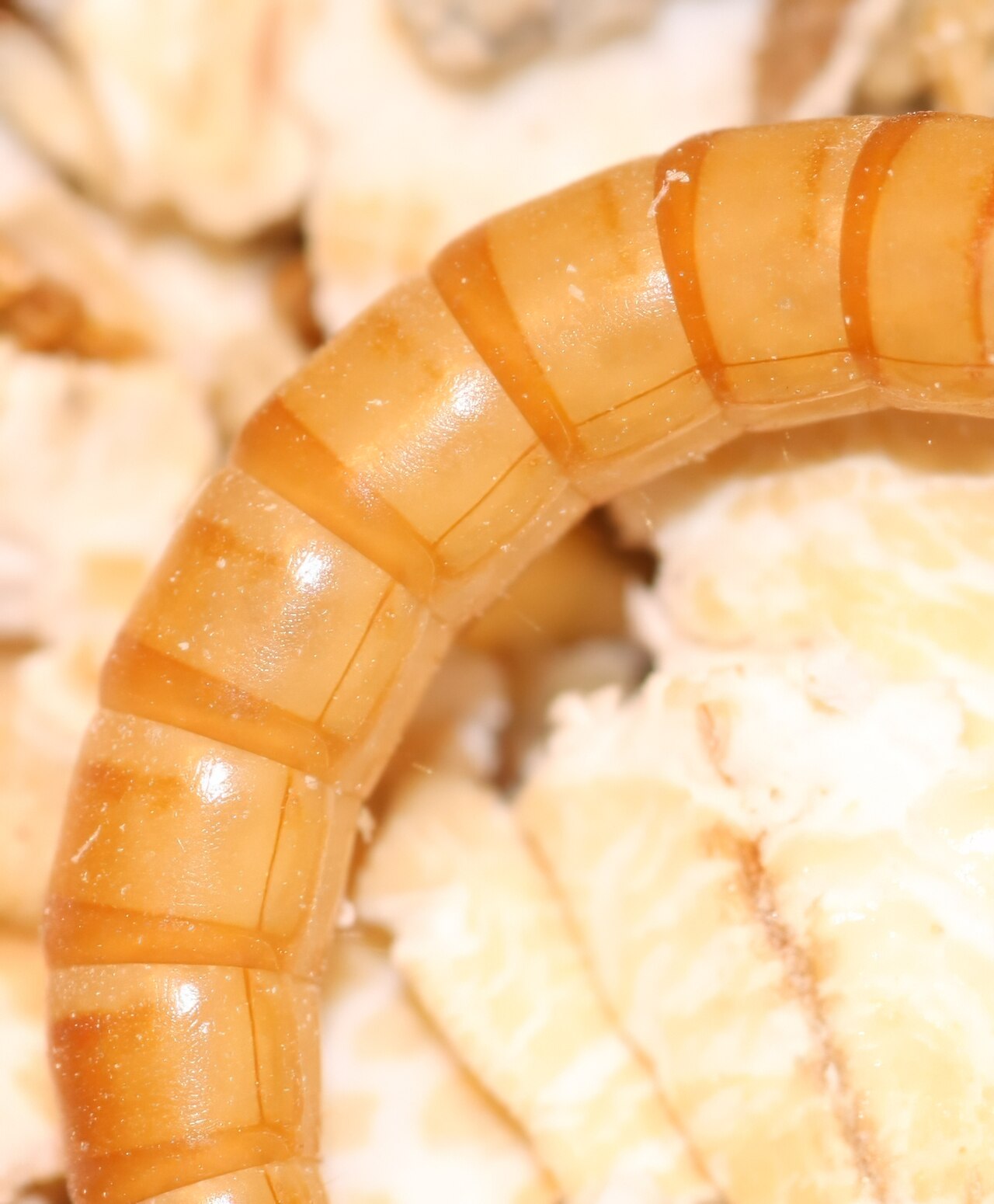
If mealworms become a habit, a home colony cuts costs to nearly nothing. Mealworms are the larva of the darkling beetle, and their whole lifecycle runs in a plastic bin:
- Setup: a smooth-sided bin with 2–3 inches of wheat bran or rolled oats as bedding-food, plus moisture from vegetable slices (carrot, potato, apple) replaced before they mold.
- Stock: start with 500–1,000 live worms. Room temperature, darkish corner, done.
- Harvest: worms keep growing for weeks in the bin; scoop what you need. To pause them, refrigerate — cold dormancy holds larvae for weeks.
- Continue: let some larvae pupate into beetles in a corner of the bin; the beetles lay eggs, and the colony self-renews for months.
- Gut-load: the day before serving, feed the harvest worms carrot or quality grain — better-fed worms feed birds better.
A bin the size of a shoebox supplies a bluebird pair all season. The only real rules: keep bedding dry-ish, replace vegetable moisture before it molds, and don’t refrigerate the breeding bin — cold stops the lifecycle, which is exactly what you use the fridge for with harvested worms.
Who Actually Eats Them
| Bird | Enthusiasm | Notes |
|---|---|---|
| Eastern, Western & Mountain Bluebirds | The devotees | The species mealworm feeding exists for |
| American Robin | Loves them | Will guard the dish from bluebirds, the brute |
| Carolina & House Wrens | Loves them | Fast learners; nesting wrens haul them by the beakful |
| Chickadees & titmice | Eager | Grab-and-go; cache extras in bark crevices |
| Woodpeckers, nuthatches | Regular | Especially in winter and nesting season |
| Mockingbirds, catbirds, orioles | Regular | Orioles take them while waiting for the jelly dish |
| Starlings | Too much | The mob risk; defend the dish with feeders they can’t enter |
7 Mealworm Mistakes
- A textured or shallow dish. The worms walk out by noon; smooth sides, 1–2 inches tall.
- Starting with dried only. Motionless worms are invisible to untrained birds; lead with live, transition later.
- Unlimited rations. Calcium-poor staple diets hurt nestlings; supplement, don’t replace hunting.
- Inconsistent timing. Random service trains nothing; same dish, same hour, same cue.
- Leaving the dish out in rain. Drowned worms mold; drained dishes or roofs only.
- Ignoring the starling risk. One discovered dish, stripped in minutes; use entry-hole feeders or cage guards.
- Forgetting the fridge. Live worms at room temperature pupate into beetles; cold storage holds them for weeks.
Frequently Asked Questions
- Train with live, maintain with dried — movement teaches, habit sustains.
- Smooth-sided dishes only — mealworms climb texture like a ladder.
- Same spot, same hour, same cue — bluebirds learn a whistle in a week.
- Ration: 50–100 per pair per day — supplement hunting, never replace it.
- Soak dried worms — plump, moist, nestling-friendly.
- Defend against starlings — entry-hole feeders and cage guards.
- A shoebox colony feeds a season — bran, carrots, and a fridge.